
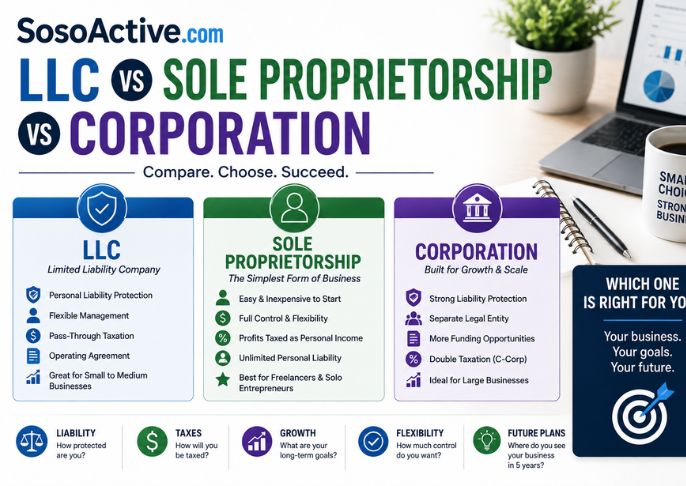
Starting a business is an exciting journey, but one of the first and most important decisions you’ll make is choosing the right business structure. The structure you select affects your taxes, legal liability, ownership, paperwork, and future growth opportunities. Whether you’re launching a freelance business, an online store, or planning to build a large company, understanding the differences between an LLC, Sole Proprietorship, and Corporation is essential.
At SosoActive.com, we help entrepreneurs make informed business decisions with practical, easy-to-understand guides. In this article, we’ll compare the three most common business structures, explain their pros and cons, and help you decide which one best fits your goals.
What Is a Sole Proprietorship?
A Sole Proprietorship is the simplest and most common business structure. It is owned and operated by one individual, and there is no legal separation between the owner and the business.
This option is popular among freelancers, consultants, photographers, bloggers, and small local businesses because it is easy and inexpensive to start.
Advantages of a Sole Proprietorship
- Simple and affordable to set up.
- Complete control over business decisions.
- Minimal paperwork and compliance requirements.
- Business profits go directly to the owner.
Disadvantages of a Sole Proprietorship
- Unlimited personal liability for business debts.
- More difficult to raise investment.
- Limited growth opportunities.
- Business ends if the owner stops operating.
According to SosoActive.com, this structure works well for individuals starting small businesses with low financial risk.
What Is an LLC?
A Limited Liability Company (LLC) combines the flexibility of a Sole Proprietorship with the legal protection of a Corporation. It creates a separate legal entity, helping protect the owner’s personal assets from business liabilities.
Many startups and growing businesses prefer an LLC because it offers legal protection while remaining relatively simple to manage.
Advantages of an LLC
- Limited personal liability.
- Flexible management structure.
- Greater credibility with customers and investors.
- Easier to separate business and personal finances.
- Pass-through taxation is available in many jurisdictions.
Disadvantages of an LLC
- Higher registration fees than a Sole Proprietorship.
- Annual filing or reporting requirements.
- Different regulations depending on your country or state.
At SosoActive.com, we recommend an LLC for entrepreneurs who want legal protection without the complexity of a corporation.
What Is a Corporation?
A Corporation is a completely separate legal entity from its owners. It can own property, enter contracts, hire employees, and continue operating even if ownership changes.
Large companies and businesses seeking outside investors often choose this structure because it supports long-term growth.
Advantages of a Corporation
- Strong liability protection.
- Easier to attract investors.
- Ability to issue shares.
- Greater business continuity.
- Enhanced professional reputation.
Disadvantages of a Corporation
- More expensive to establish.
- Extensive legal and financial reporting.
- More complex tax and compliance requirements.
- Increased administrative responsibilities.
Businesses planning rapid expansion often benefit from the corporate structure despite its additional responsibilities.
LLC vs Sole Proprietorship vs Corporation
Choosing the right structure depends on your business goals, financial situation, and future plans.
Liability Protection
A Sole Proprietorship provides no separation between personal and business assets. If the business incurs debt or faces legal action, the owner’s personal assets may be at risk.
An LLC offers limited liability, protecting personal assets in most situations.
A Corporation provides the highest level of legal protection because it is an independent legal entity.
Taxation
Sole Proprietorships generally report business income on the owner’s personal tax return.
LLCs often offer flexible taxation options depending on local regulations.
Corporations may have separate corporate tax obligations, although tax rules vary by jurisdiction.
Consulting a qualified accountant can help determine the most tax-efficient option for your business.
Startup Costs
Sole Proprietorships usually have the lowest startup costs.
LLCs require registration fees and ongoing compliance.
Corporations often involve the highest setup and maintenance costs.
Business Growth
If you plan to remain a small business, a Sole Proprietorship may be sufficient.
If you expect moderate growth while protecting personal assets, an LLC is often the preferred choice.
If your goal is to attract investors, expand internationally, or issue shares, a Corporation may be the better option.
At SosoActive.com, we encourage entrepreneurs to consider their long-term vision rather than focusing only on startup costs.
Which Business Structure Is Best?
There is no one-size-fits-all answer.
Choose a Sole Proprietorship if you:
- Work independently.
- Have low startup costs.
- Want the simplest business structure.
Choose an LLC if you:
- Want liability protection.
- Plan to grow your business.
- Prefer a balance of flexibility and legal security.
Choose a Corporation if you:
- Need investment capital.
- Plan large-scale expansion.
- Expect multiple shareholders.
Your decision should align with your financial goals, risk tolerance, and future business plans.
Tips Before Choosing a Business Structure
Before registering your business, keep these points in mind:
- Understand local legal requirements.
- Estimate future business growth.
- Consider tax implications.
- Separate business and personal finances.
- Consult legal and financial professionals when necessary.
- Review your structure as your business evolves.
Making the right choice early can save time, reduce costs, and support long-term success.
Final Thoughts
Choosing between an LLC, Sole Proprietorship, and Corporation is one of the most important decisions you’ll make as an entrepreneur. Each structure offers unique benefits and challenges, so the right choice depends on your business goals, budget, and growth plans.
At SosoActive.com, we believe that understanding these differences helps entrepreneurs build stronger businesses from the very beginning. Whether you’re starting a side hustle or planning a large company, selecting the right legal structure today can create a solid foundation for future success.
Frequently Asked Questions
Is an LLC better than a Sole Proprietorship?
For many growing businesses, yes. An LLC provides liability protection while remaining relatively simple to manage.
Can I change my business structure later?
Yes. Many entrepreneurs begin as Sole Proprietors and later transition to an LLC or Corporation as their businesses expand.
Which business structure is best for startups?
Startups seeking investment often choose a Corporation, while many small businesses begin as LLCs.
Is a Corporation more expensive?
Generally, yes. Corporations typically involve higher registration fees, legal requirements, and ongoing compliance costs.
Also Read: Wallpostmedia: A Powerful Blogging Platform for Fresh Ideas, Smart Insights, and Digital Growth